01 | Own teams
Colleagues who never meet.
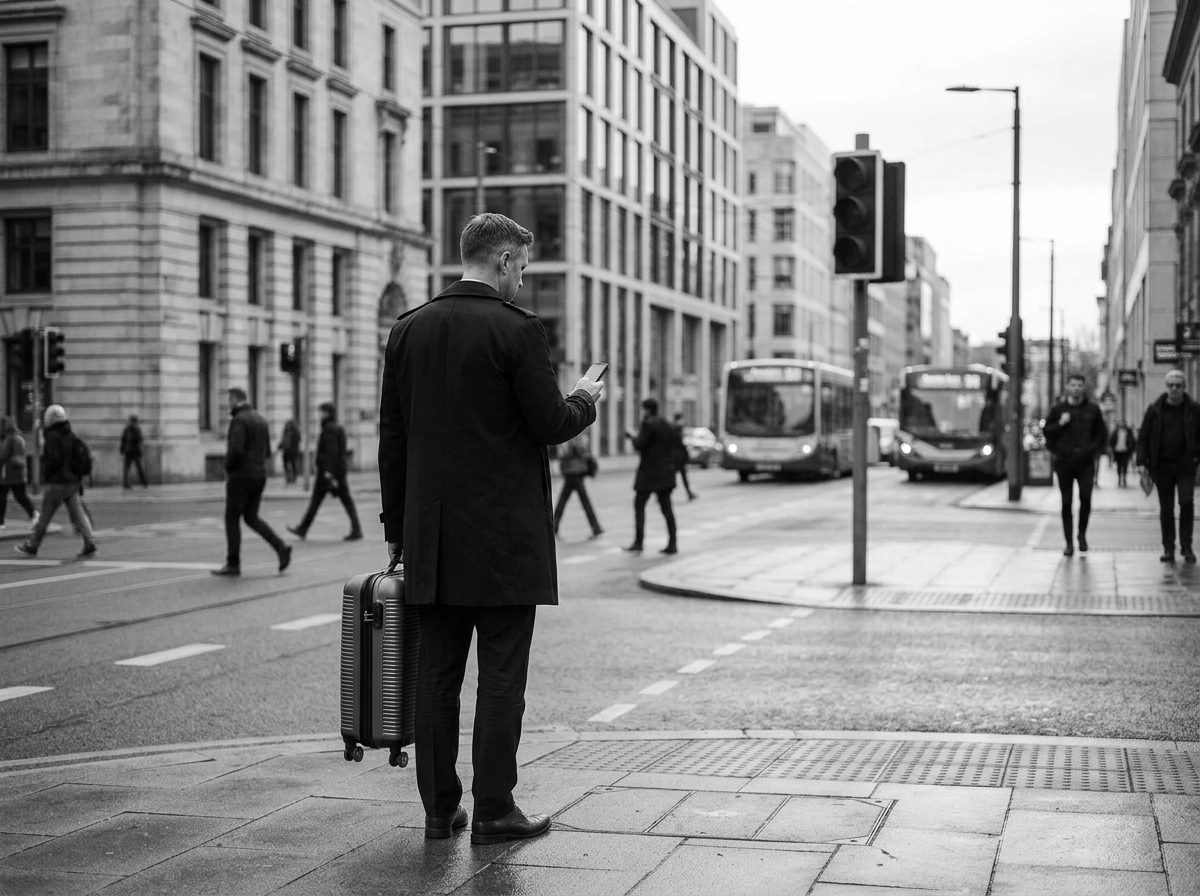
In large organisations, hundreds of people travel at the same time. Two, three or more colleagues from different units are in the same city on the same day, each for their own client, and never find out.
Companies · Travel programmes · Associations
Organisations send their people to the same cities, airports, hotels and events every week. SEEON shows who is relevant around you on these trips: colleagues, partners, members, and people you have not met yet. It runs inside existing travel tools or as a standalone app. No location tracking, nothing stored.
Business travel already brings the right people into the same places, often far from any event: the same city on the same day, for entirely different reasons. What is missing is the moment they notice each other. SEEON covers that moment, only when people choose to be visible. The people are already there. SEEON makes the conversation possible.
01 | Own teams
In large organisations, hundreds of people travel at the same time. Two, three or more colleagues from different units are in the same city on the same day, each for their own client, and never find out.
02 | Clients & partners
Sales and project teams travel to the same cities as their clients and partners. Today, a meeting only happens if someone arranged it weeks in advance.
03 | Members
Association members travel to the same destinations all year. They usually only see each other at the annual conference.
04 | On your own
An evening after the last meeting. Someone you would want to meet is a few streets away. Nobody knows.
Most relevant encounters on business trips still happen by chance, if they happen at all.
Companies and associations create their own White Rooms. Who belongs in is confirmed through your own systems. Only your people see each other inside, wherever they are: in a city, on the road or at an event. Beyond that, travellers can also be visible to other relevant professionals around them, if they choose. Use is voluntary for everyone.
01 | Companies
Your company creates its own White Rooms. Employees are identified through your company's API, so only your people get in. On SEEON's side, this becomes an anonymised token immediately. Nothing is stored. SEEON can also be embedded into your corporate travel app or your travel management company's platform.

02 | Associations
Associations such as business travel or industry networks create White Rooms for their members. Membership is confirmed through the association's API, then turned into an anonymised token. Members see who else from the network is relevant nearby, in the same city, on the road and at events. The association never sees where its members are.
03 | Visibility
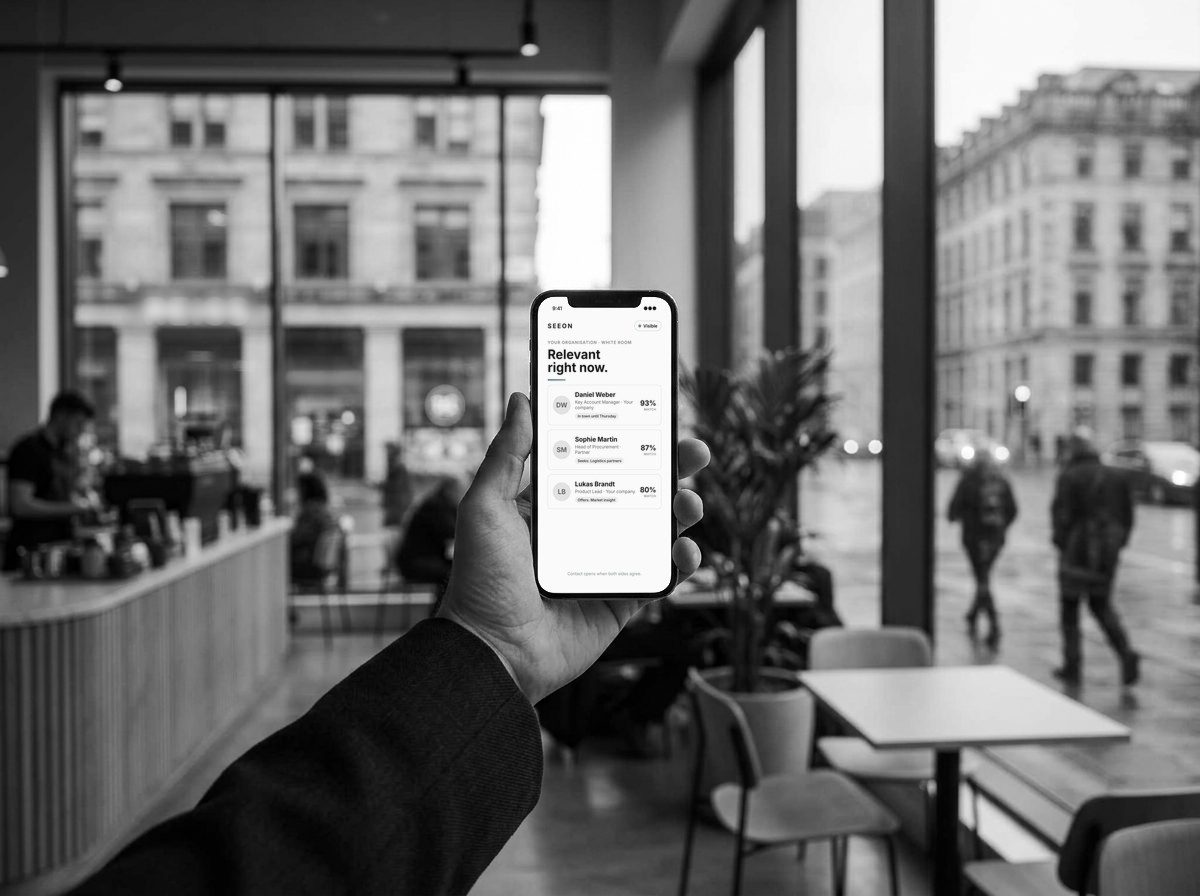
Visibility is set by each person, not by the employer, the association or SEEON. If you do not activate, you do not exist in the system. Contact opens only when both sides want it.
SEEON does not follow anyone's location. There is no live location, no background tracking and no movement history. The only location check is a one-time confirmation, on entering a White Room, that you are actually there. Employers and associations see aggregate usage at most, never who was where.
Proximity infrastructure for business travel
SEEON is looking for companies, travel management companies and associations whose people are on the road, in the city next door or on the other side of the world.